



7 min read

HVAC Refrigerant Transition 2026: How to Price R-454B and R-32 Jobs Profitably

HVAC Refrigerant Transition 2026: How to Price R-454B and R-32 Jobs Profitably

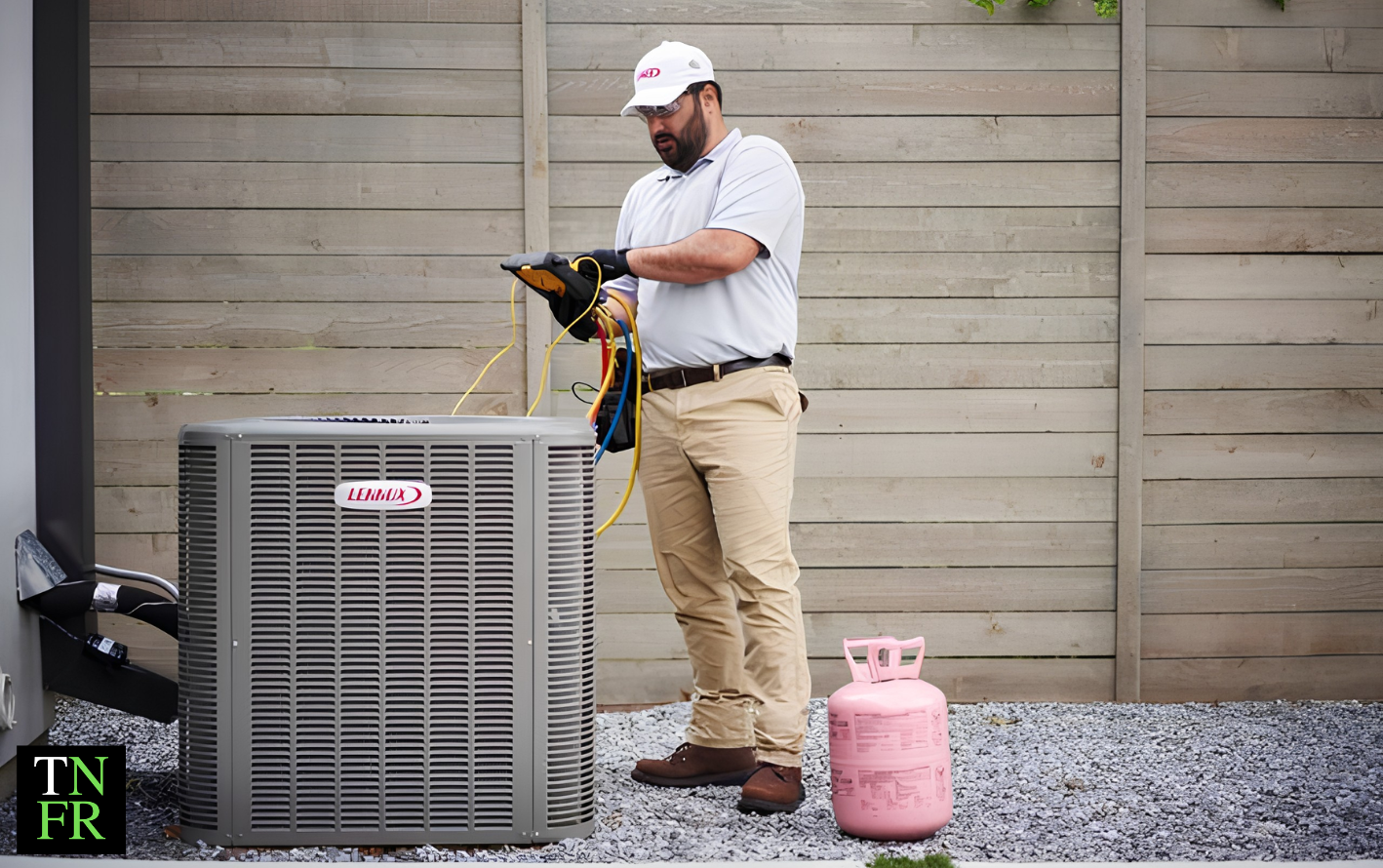
The HVAC refrigerant transition in 2026 has contractors asking some big pricing questions. What will R-454B and R-32 cost? What new expenses come with A2L refrigerants? Should you charge by the pound? And how often should you change your pricing?

The short answer

Price R-454B and R-32 jobs from your full cost of doing the job, not just the cylinder price. Account for new training, tools and extra time on the job, check A2L costs more often than once or twice a year, and tie every price back to your billable hour and daily truck goal. We asked Russ Franklin, Field Support Lead at The New Flat Rate, menu pricing software and training for home service contractors, how he'd handle it.

Last updated: October 23, 2026

Those questions matter because the transition is already affecting contractors in the field. R-454B and R-32 are being used in new residential HVAC equipment as the industry moves to refrigerants below the EPA's 700 GWP limit. R-454B has a GWP of 470 and is classified as an A2L refrigerant. R-32 also falls below the 700 GWP limit. EPA reported that installations using R-454B and R-32 increased significantly in 2025.

What is R-454B refrigerant? R-454B is a next-generation HVAC refrigerant with a Global Warming Potential (GWP) of 470, classified as mildly flammable (A2L) under ASHRAE standards. It's replacing R-410A in new residential systems as manufacturers meet the EPA's 2025 phasedown rule capping refrigerants at 700 GWP or below. R-32, a related low-GWP option, is also gaining adoption under the same regulatory shift.

R-454B vs. R-32 vs. R-410A: quick comparison

  R-410A (legacy) R-454B R-32
GWP 2,088 470 675
ASHRAE classification A1 (non-flammable) A2L (mildly flammable) A2L (mildly flammable)
Regulatory status Restricted for new equipment manufactured/imported after Jan 1, 2025 Approved replacement, EPA-compliant Approved replacement, EPA-compliant
Field availability (2026) Declining, still serviceable in eligible existing systems Regionally inconsistent; documented shortages Growing but market-dependent
Typical use Existing/older residential systems New residential HVAC equipment New residential HVAC equipment

EPA also documented something contractors have already experienced firsthand: R-454B was being manufactured in sufficient quantities, but service cylinders weren't always getting into contractors' hands. That created regional scarcity and made it difficult for some contractors to get refrigerant in the field.

So how should an HVAC company think about pricing through all of this? We asked Russ Franklin, The New Flat Rate's Field Support Lead.

What new costs should HVAC contractors account for with R-454B and R-32?

Russ:

Typically, with any new refrigerant release, there will be new training costs, tools, equipment maintenance, and travel expenses.

Then, outside of a classroom, there will be real-world application testing, which accounts for more time on the job.

That's one of the first things contractors need to understand about the HVAC refrigerant transition.

The cost of the refrigerant itself is easy to see. It's sitting on an invoice.

The other costs aren't always as obvious.

Your technicians have to learn the equipment. Your company may need new tools. Jobs may take longer while technicians gain real-world experience. Your operating costs can change before you've ever adjusted the price of a pound of refrigerant.

If you're only watching the cylinder price, you're only watching one part of the job.

RF

"If you're only watching the cylinder price, you're only watching one part of the job."

Russ Franklin, Field Support Lead · The New Flat Rate

(For a deeper breakdown of where else contractors lose revenue on the truck, see our HVAC pricing guide, and for the training side of this equation, see HVAC technician training: what most programs miss.)

Should HVAC contractors sell R-454B or R-32 by the pound?

Russ:

First, we need to determine the type of job we are on: replacement of equipment or service work.

If this is service work, I typically don't recommend selling by the pound because, from the customer's perspective, selling by the pound means the supply chain isn't in question, ever.

However, what we have noticed in some areas is that A2Ls have been scarce for service work, or suppliers have required the purchase of new equipment in order to buy a cylinder of refrigerant or get a cylinder "loaned" to them for a job.

Depending on where an HVAC company is in the country, they should look at what refrigerant is readily available in their area. At this point, they can determine cost plus markup to affect our daily truck goal.

Another strategy I would like to see used more is contractors not being afraid to make a friend of another semi-local contractor and work together to help each other in a time of true need.

We have noticed a few of our customers working together with a term they coined, "co-opetition."

This is the act of competitors deliberately working together to help each other succeed.

That matters when refrigerant availability can change from one market to another. Contractors across the industry have been vocal about exactly this kind of local supply disruption. See ACHR News: HVAC Contractors Sound Off on R-454B Shortage for more on how widespread the availability problem has been.

It also means copying another contractor's R-454B price isn't much of a pricing strategy.

Their supply situation may be different.

Their costs may be different.

Their daily truck goal may be different.

Their billable hour may be different.

You need to know your numbers.

RF

"Copying another contractor's R-454B price isn't much of a pricing strategy... You need to know your numbers."

Russ Franklin, Field Support Lead · The New Flat Rate

Stop guessing. Start pricing with a plan. You know your costs. You know your truck goal. Now you need a pricing strategy that turns those numbers into profitable options for your customers. Download the free Menu Pricing Toolkit and build a pricing approach around your business, not the contractor down the street.

How often should you review R-454B and R-32 pricing?

Russ:

When it comes to pricing refrigerant, typically the industry only looks at cost a couple of times a year.

But with A2Ls, we should check for cost increases more often to make sure our billable hour aligns with our goals.

Also, contractors need to implement daily truck goals and weekly revenue targets.

The contractor got into business to make a profit and have more impact on their family and community.

If you know your numbers, slight adjustments can be made to a company's billable hour, resulting in more profitability.

If contractors had not started their company with the intention of making a profit, meaning deliberately pricing for growth, then they are already behind the curve.

That's the bigger lesson here.

The question isn't only: "What should I charge for R-454B?"

You also need to ask: "What does my truck need to produce today?" "Is my billable hour still accurate?" "Are my weekly revenue targets producing the profit my company needs?"

A supplier price change should trigger you to look at those numbers, not blindly add the same markup you've always used.

If you need help thinking through the rest of your service pricing, our HVAC pricing guide breaks down some of the other places HVAC contractors lose revenue without realizing it.

Not sure what a truck roll actually costs you before you even touch a refrigerant line? Use The New Flat Rate's Truck Roll Cost Calculator to find your real number before adjusting pricing.

What's the biggest mistake contractors could make during the A2L transition?

Russ's answer wasn't about refrigerant. It was about fear.

Russ:

Fear and uncertainty from a contractor or the technicians will lead to a decrease in closing rate.

The old saying, "Fair weather doesn't make good sailors," comes to mind.

In any industry, facing problems head-on with the willingness to get the job done correctly and surrounding your team with resources that will actually help will go a long way.

I keep hearing contractors stating they aren't going to events anymore, or they are too busy.

I found that at trade shows and networking events, I made contacts. These contacts helped me find resources when I needed them.

People should surround themselves with a network of people that want them to succeed and to grow with them.

That's worth paying attention to.

Your technicians are going to hear customers ask questions about the new refrigerants.

Your suppliers may change prices.

Availability may change.

Your team may run into equipment they haven't worked on many times before.

If the contractor is uncertain, that can work its way down to the technician and eventually into the customer's home.

Training, knowing your numbers and having people you can call become part of how you handle the transition.

RF

"Fear and uncertainty from a contractor or the technicians will lead to a decrease in closing rate."

Russ Franklin, Field Support Lead · The New Flat Rate

Looking for other contractors working through the same thing? Join the free HVAC, Plumbing & Electrical Business Owners group on Facebook.

So, how should you price R-454B and R-32 jobs in 2026?

Key takeaways

  • Start with the cost of doing the job, but don't stop at the refrigerant.
  • Account for the new costs that come with the transition.
  • Watch refrigerant costs more frequently.
  • Know your billable hour.
  • Set daily truck goals and track weekly revenue targets.
  • Know what profit your company needs to produce.
  • Don't assume the contractor down the road has the answer for your company.

At The New Flat Rate, we say it this way: we don't sell parts. We use parts.

Refrigerant is something you use to solve the customer's problem. Your pricing has to pay for everything it takes to put a trained technician in that home, solve the problem correctly and run a profitable HVAC company when the job is finished.

Do you know what your billable hour should be?

Before you change your R-454B or R-32 pricing again, calculate what your company actually needs to charge. Use The New Flat Rate's free Billable Hour Calculator to see what every productive hour needs to generate based on your company's numbers.

Frequently asked

HVAC refrigerant pricing FAQs

Q1

What is R-454B refrigerant?

R-454B is a next-generation HVAC refrigerant with a GWP of 470, classified as mildly flammable (A2L) under ASHRAE standards. It's replacing R-410A in new residential systems as manufacturers meet the EPA's limit of 700 GWP or below. R-32 is a related low-GWP option gaining adoption under the same shift.

Q2

Is R-410A banned in 2026?

No, describing R-410A as simply "banned" is misleading. EPA's May 2026 rule removed the installation deadline for certain residential and light-commercial R-410A systems when the specified equipment was manufactured domestically or imported before January 1, 2025. New R-410A systems using equipment manufactured or imported after that date remain restricted under the rule.

Q3

Should HVAC contractors charge R-454B by the pound?

For service work, Russ typically does not recommend making per-pound refrigerant pricing the center of the job. Contractors should account for refrigerant cost while also considering the billable hour, daily truck goal and total cost of delivering the service.

Q4

How often should HVAC contractors update R-454B pricing?

There isn't one schedule that fits every contractor. Russ recommends watching A2L costs more frequently than the industry's traditional once-or-twice-a-year pricing review, especially when supply and local costs are changing.

Q5

What costs should be included when pricing an A2L refrigerant job?

Look beyond refrigerant cost. Training, tools, and equipment maintenance can affect your company's work costs. Travel can also increase costs. Extra time for hands-on technician experience may raise costs too.

Free trial

Prices keep moving. Is your price book keeping up?

When refrigerant costs change, every price on the truck should change with them. The New Flat Rate builds your menus from your own numbers, so an update to your costs reaches every option your techs present.

A price book built from your own numbers


Five-option menus on every task


Field Support included during the trial

Start your free trial

HVAC Pricing App: What to Look for Before You Buy

HVAC Pricing App: What to Look for Before You Buy

HVAC Pricing App: What to Look for Before You Buy Most HVAC pricing apps solve the wrong problem. They take a paper pricebook, or a spreadsheet, or a...


Read More
How to Price an HVAC Maintenance Plan for Profit

How to Price an HVAC Maintenance Plan for Profit

HVAC maintenance plans are supposed to create predictable revenue, keep customers loyal, and give technicians useful work during slower months. They...

Read More
The HVAC Pricing Guide: 8 Bottlenecks That Are Costing You Revenue (And How to Fix Them)

The HVAC Pricing Guide: 8 Bottlenecks That Are Costing You Revenue (And How to Fix Them)

Your schedule is full. Your trucks are rolling. Your customers are calling. So why does the bank account look thin at the end of each month? The...

Read More