

5 min read

Home service businesses can attract search traffic without turning it into booked work. As AI search answers more homeowner questions before a website visit, contractors face pressure to improve visibility while making every visit count.
The problem persists when content, advertising, websites, and phone handling operate separately. More pages or a larger advertising budget may bring attention, but neither fixes an irrelevant landing page, an unanswered call, or an unclear picture of acquisition costs.
Thaddeus Tondu, CEO of On Purpose Media, brings a practical perspective from working with home service businesses on SEO, paid search, and websites. His guidance on The New Flat Rate connects marketing decisions with the operational work required to turn interest into revenue.
The sections below break down changing search behavior, landing-page relevance, and meaningful return measurements. They also explain how authentic website content can help homeowners decide whether a business deserves their call.
What AI Search Changes About Helpful Content
AI answers are changing how homeowners gather information, not eliminating their need for useful information. The practical response is to address specific questions with relevant expertise rather than publish more content simply because production has become easier.
Separate urgent searches from research questions
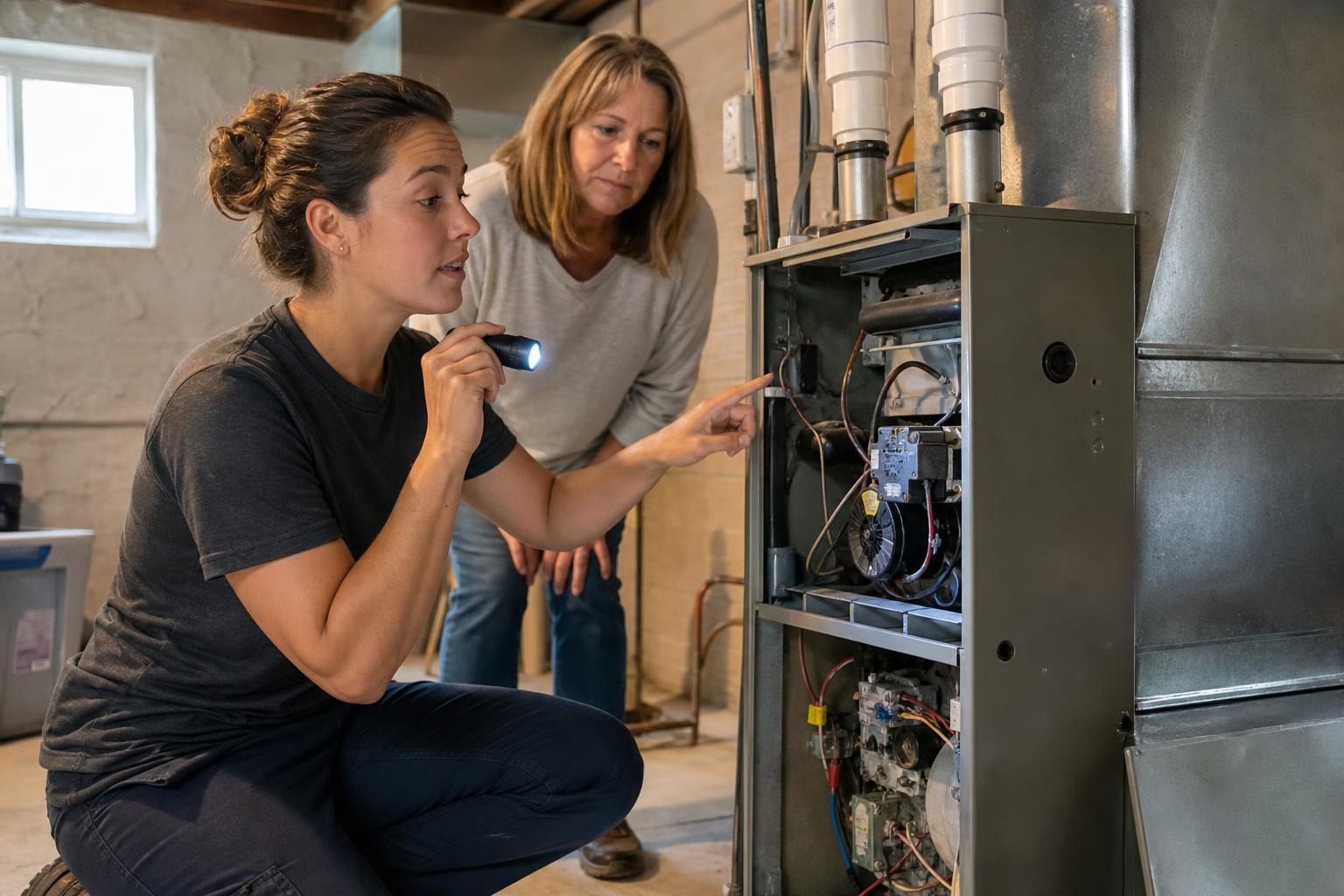
A homeowner searching for AC repair nearby has a different immediate need from someone asking why a furnace blows cold air. The first is looking for a provider; the second is gathering information. Content planning should recognize both intentions instead of treating every query as a request to book service.
Answer the question instead of expanding the page count
AI tools make it easy to generate pages, but volume alone does not establish expertise or trust. Helpful content addresses the homeowner’s actual concern and reflects what the business knows. A focused explanation of a specific service question is more useful than repeated material that adds little beyond another searchable page.
Keep human review in the publishing process
AI can assist with drafting without becoming the final authority on a business’s services. On Purpose Media reviews and edits AI-assisted content before publishing, incorporating corrections when client information is inaccurate. That approach makes human judgment a required step rather than an optional check after a page goes live.
- Identify the homeowner’s specific question.
- Match the answer to verified business expertise.
- Review every draft for accuracy and relevance.
- Remove repetitive or unhelpful material.
This checklist gives a reviewer a clear publishing standard. It also keeps faster production from replacing the work of deciding whether a page genuinely helps.
The priority is not competing with AI on output volume. It is providing information worth using, whether the homeowner encounters it through an answer summary or a website.
Make PPC Landing Pages Match the Search
Paid search brings someone with a particular problem to a particular page. That connection weakens when an ad promises a specific repair but the destination speaks broadly about the contractor rather than the service being sought.
Give each advertised service a relevant destination
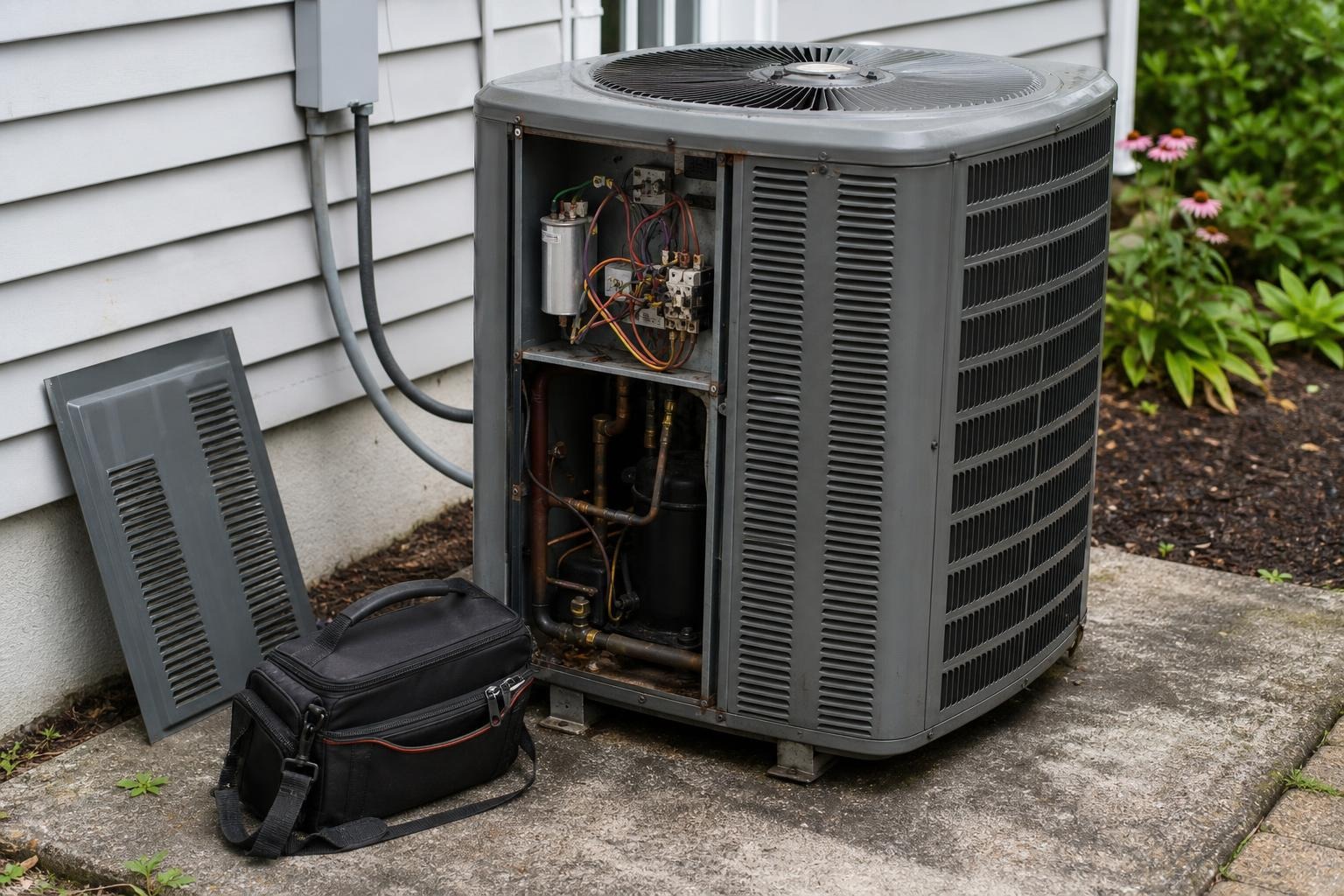
An AC repair ad should lead to an AC repair page, not a general HVAC overview. Furnace repairs, installations, tune-ups, and memberships also need destinations that match the advertised service. The page should preserve the connection between the original search and the solution the homeowner expects to find.
Refine targeting without losing message continuity
Keyword monitoring remains part of campaign maintenance, including excluding irrelevant searches such as car AC repair from a residential campaign. Geographic targeting can also connect city-specific campaigns with corresponding pages when the budget supports that approach. Both adjustments should keep the destination relevant to the service and location being advertised.
Treat phone handling as part of paid-search performance
The marketing task does not end when someone calls. An unanswered call or weak booking process can waste the opportunity the campaign paid to create. Evaluating paid search therefore requires attention to both landing-page performance and the operational handoff that determines whether an interested homeowner becomes a customer.
- Confirm the search and landing page match.
- Exclude clearly irrelevant search terms.
- Check how incoming calls are answered.
- Review whether qualified calls become bookings.
These checks follow the customer’s path rather than stopping at advertising metrics. They help distinguish a targeting problem from a page problem or a booking problem.
Before increasing spend, a contractor should trace one advertised service through to booking. Fixing a broken handoff addresses an existing weakness instead of paying to send more people through it.
Read ROAS Without Hiding Acquisition Costs
A strong-looking return on ad spend, or ROAS, does not necessarily reveal how efficiently a business acquires new customers. The useful questions concern which customers the report includes, what revenue is realized, and whether the economics support the campaign.

Separate new customers from existing customers
Combining new and existing customers can make acquisition performance look stronger than it is. Reports should distinguish those groups and separate branded from nonbranded campaigns. That distinction makes it easier to assess the cost of attracting unfamiliar homeowners rather than counting every customer interaction as equivalent evidence of growth.
Distinguish estimated potential from closed revenue
Potential revenue assigns an estimated value to incoming leads; it is not revenue the business has already realized. Tracking potential, sold, and closed figures separately keeps that distinction visible. Weak potential suggests a marketing issue worth investigating, while a large gap between potential and closed results warrants an operational review.
Test campaign costs against the average ticket
Tondu illustrates the concern with an $800 blended average ticket against a $700 customer acquisition cost. Those figures describe an example, not a universal benchmark. The lesson is to examine current transaction economics before relying on future customer value to justify an expensive acquisition channel.
- Separate new-customer acquisition results.
- Distinguish branded and nonbranded campaigns.
- Compare potential with closed revenue.
- Check acquisition cost against average tickets.
A useful report supports a decision, not merely a favorable headline. These distinctions help identify whether the next change belongs in marketing, booking, or the business’s service economics.
Spending more makes sense only after the numbers are understood. A business should know what the campaign produces and what happens to those opportunities before judging its return.
Build a Website That Makes the Business Credible
Websites still give homeowners a place to evaluate a provider before contacting it. Clear service information, sound technical foundations, and genuine photographs help that evaluation without requiring a business to abandon established website practices for an entirely new approach.
Use actual photos of the business
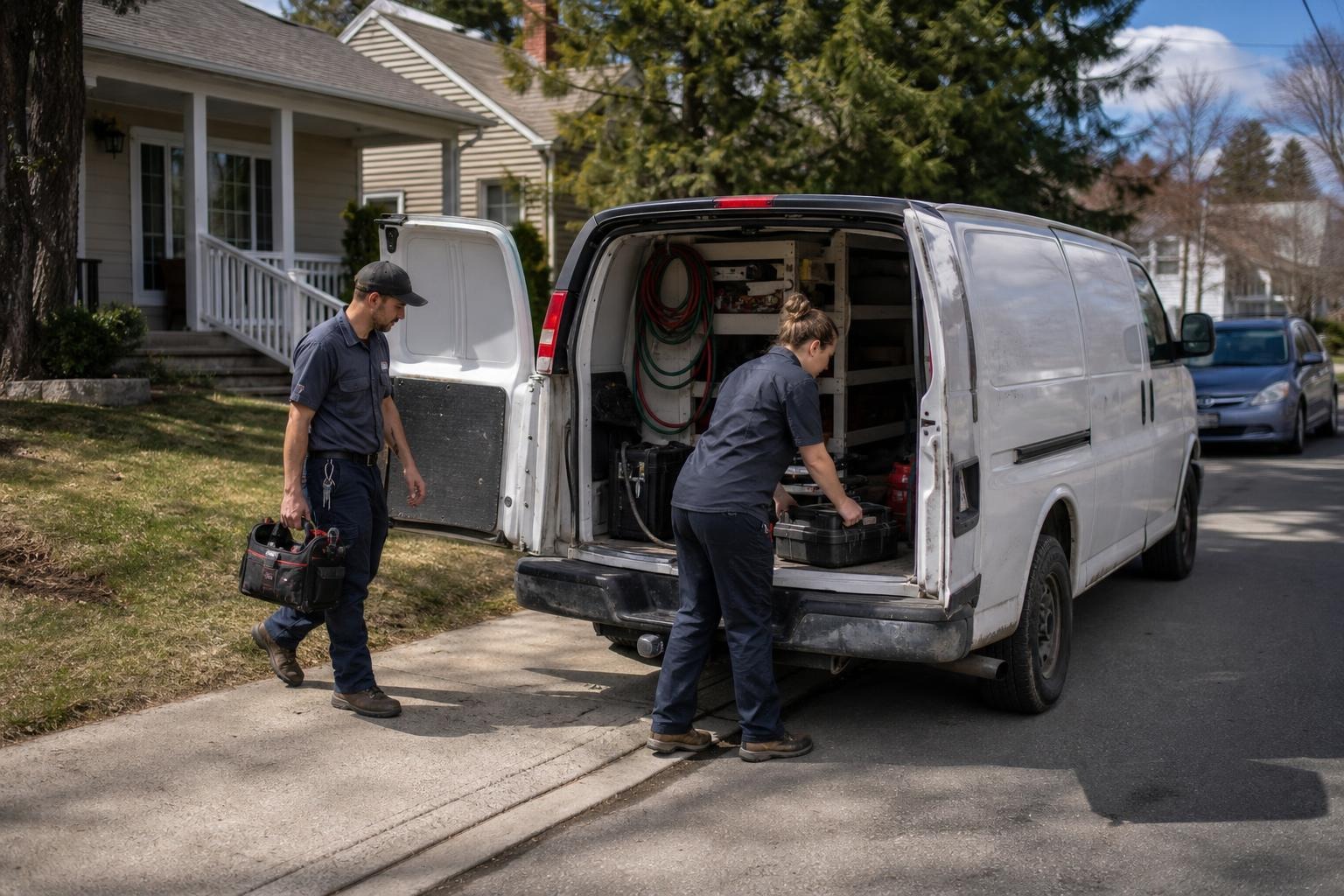
Website photography should show the actual team, vehicles, and work rather than leave visitors guessing who provides the service. Recognizable local surroundings can add context. The recommendation applies to a one-person business as well as a larger fleet, and useful photos can come from a phone rather than a professional shoot.
Maintain the fundamentals beneath the design
Helpful content, relevant FAQs, and a sound technical backend remain part of website work as search changes. Design updates do not replace those foundations. A refreshed appearance and a technical review address different needs, so an attractive page should not be assumed to resolve every underlying website problem.
Improve conversion before chasing more traffic
An underperforming website deserves an assessment before an automatic rebuild or a larger traffic budget. Some sites need extensive work; others can benefit from targeted conversion changes. The first question is whether more of the visitors already arriving could become phone calls or other inquiries through improvements to the existing site.
- Add current photos of the actual business.
- Review service information and FAQs.
- Assess technical and conversion problems separately.
This review gives a website update a purpose beyond looking newer. It ties the work to credibility, useful information, and the ability to generate inquiries.
The website should make the real business easier to evaluate. Improving that experience is a practical starting point when existing traffic is not producing enough calls.
Conclusion
AI search changes how homeowners reach information, but it does not remove the need for a credible provider and a dependable booking process. Marketing performance depends on the complete path from discovery to closed work.
Useful content starts with a real homeowner question and verified business knowledge. Human review keeps faster production from becoming a substitute for accuracy.
Paid-search relevance must continue beyond the ad. A service-specific page and reliable phone handling work together to preserve the opportunity created by the click.
Reporting should reveal new-customer costs and closed results rather than hide them in blended figures. Those distinctions give marketing and operations a shared basis for deciding what needs attention.
A contractor facing disappointing results can begin by reviewing one service’s search content, landing page, call handling, and revenue tracking. That focused check helps identify the broken step before more money is committed to traffic.
Frequently Asked Questions
How does AI search affect home service SEO?
AI answers can satisfy research questions before a website visit, making specific, helpful, human-reviewed content a practical priority.
Should every PPC service have its own landing page?
Each advertised service should lead to a relevant destination, such as an AC repair page for an AC repair campaign.
Why separate new and existing customers in ROAS reports?
Blended reporting can obscure the cost of acquiring new customers and make acquisition performance appear stronger than the separate results justify.
Do website photos need to be professionally produced?
No. Clear phone photos of the actual team, vehicles, and work can provide useful evidence of the business behind the website.
What should a contractor review before increasing advertising spend?
Review landing-page relevance, call answering, booking results, new-customer acquisition costs, and whether existing website traffic could generate more inquiries.