


4 min read

Emergency Calls: What Plumbing Dispatch Software Should Do

Emergency Calls: What Plumbing Dispatch Software Should Do

How do plumbing companies handle emergency calls when the schedule is already full? Not with better routing. The best plumbing dispatch software makes the reshuffle visible and fast, but the real win comes from running the playbook before an emergency ever lands: hold capacity, pre-decide what moves, and keep the customers you have to bump.

What you'll walk away with

  • A reserve-capacity policy that stops every emergency from turning into a crisis
  • A pre-approved list of which scheduled jobs can move and which can't
  • A customer-recovery script that keeps bumped customers from booking somewhere else next time

How Do Plumbing Companies Handle Emergency Calls When the Schedule Is Already Full?

Here's the thing about plumbing dispatch: emergencies aren't the exception. They're the business.

A homeowner comes home to standing water in the basement. A commercial property manager calls because a toilet is flooding a lobby. A main line backs up at 11 AM on a Wednesday. These calls don't wait for an open slot. They can't be moved to tomorrow without turning into a bigger problem (and a worse review).

The accepted truth about plumber dispatch software is that it's about routing efficiency: send the nearest available truck, minimize drive time between jobs. That matters, but it's not the real problem. The real problem is what to do when the board is already full and the phone rings at 2 PM with water pouring through a ceiling.

Shops that handle emergency plumbing dispatch well don't win it on software. They win it on four moves that happen before and after the dispatch click. Here's the playbook.

The 4-Step Plumbing Dispatch Playbook

1. Hold capacity before you need it

The single biggest change contractors can make in how they dispatch isn't a software switch. It's deciding not to book every hour. Hold 15 to 20 percent of your scheduled capacity open for same-day emergencies, usually a mid-day window you don't commit to scheduled work. If no emergency comes in, your team catches up on paperwork, maintenance agreements, or picks up a job that was running late. If one does come in, you have somewhere to put it without blowing up five other customers. The dispatch software can't do this for you. It can show you the hole. You have to decide to leave it open.

2. Pre-decide which scheduled jobs can move

Not every scheduled job can be bumped. Rechecks tied to a specific appointment, multi-trade installs where other trades are on site, and senior customers who built their day around a window all stay put. Routine maintenance, scheduled estimates with flexible windows, and already-quoted low-urgency repairs can move. Write that distinction down before an emergency hits. When the 2 PM flood call comes in, your dispatcher doesn't want to be re-evaluating which jobs are safe to move. They want a short, pre-approved list.

3. Make the plumbing dispatch board answer four questions in 30 seconds

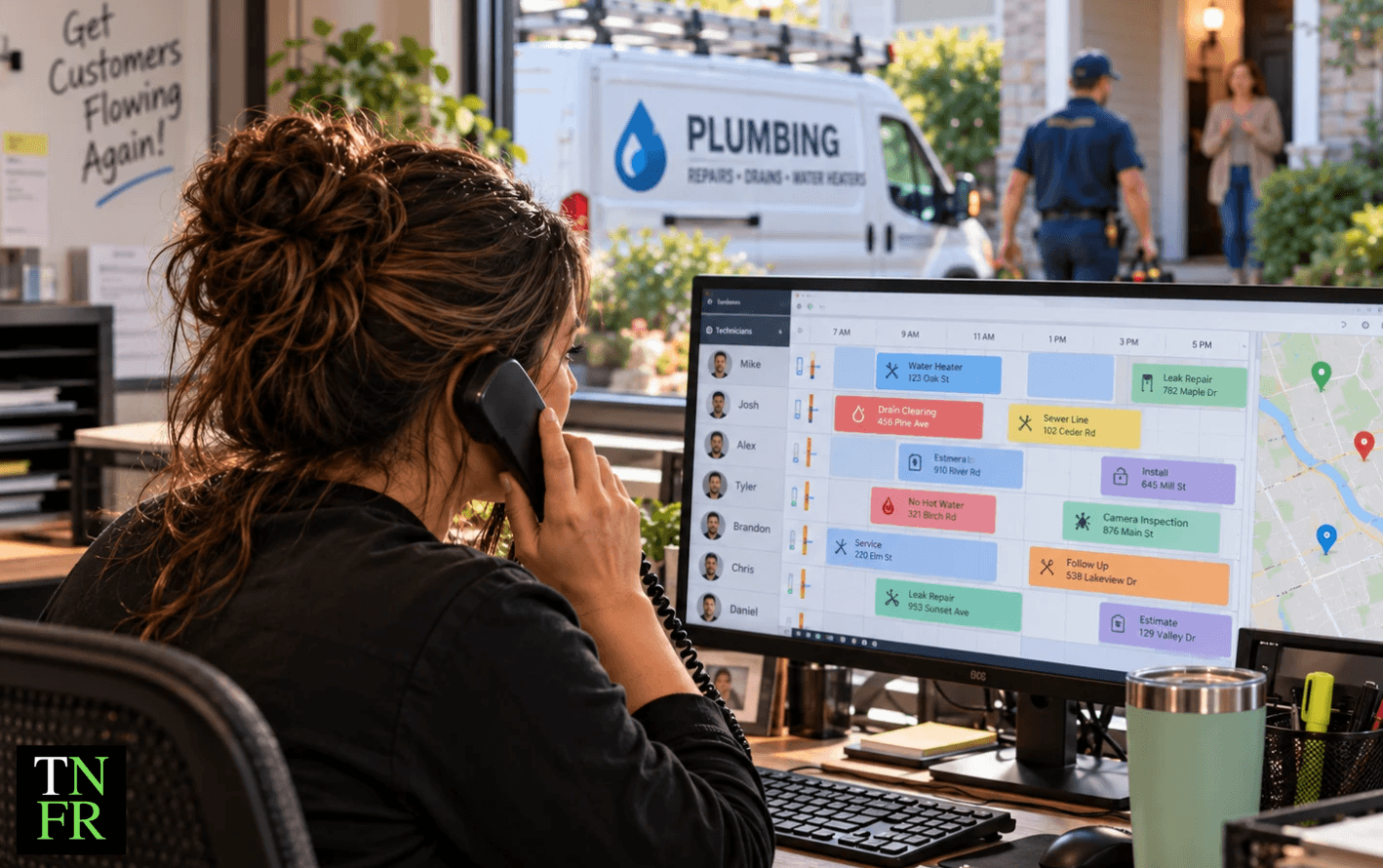
When the emergency lands, your plumbing dispatch board should answer four questions fast: (1) who's close to finishing? (2) where is each truck? (3) what's the status of each remaining job and which are flagged safe-to-bump? (4) what are the customer-specific notes for each job? A good dispatch software for plumbers surfaces all four in a single view. A great one shows the same context on the plumber's phone through the plumbing dispatch app, so the tech about to get rerouted sees exactly what the dispatcher sees. Whether the tech you reassign is the right fit for what they're walking into is a different conversation, covered in Does It Matter Which Technician You Send to an HVAC or Plumbing Call?. On emergency days, you often don't get to send your best plumber. You send whoever is free.

4. Call the bumped customer personally, within 10 minutes

The dispatch click is the easy part. The hard part is calling the customer who just got moved to tomorrow. Here's where most shops lose a customer they otherwise would have kept. Call them personally, not via email or text. Be honest about what happened: "We had an emergency come in that we had to prioritize" is a fine answer. Offer a specific alternative window ("tomorrow between 8 and 10"), not a vague one. And when the tech shows up for the rescheduled call, have them acknowledge the shuffle. On an emergency day, you often send whoever is free, not your best closer. When every plumber on your team presents the same five-option menu, the outcome depends less on who got sent. For more on how to build a sales conversation that doesn't depend on which tech is on the call, see Plumbing Sales Training: How to Train Plumbers to Sell.

Want to know what every truck move actually costs you?

The free Truck Roll Cost Calculator gives you a real number per reshuffle, so you can decide whether a move is worth the fuel, the time, and the bumped customer.

Get the Truck Roll Cost Calculator →

Where Shops Get This Wrong

Do this

Hold reserve capacity for the emergencies you know are coming, pre-decide the "safe to bump" list, and own the bumped-customer call personally.


Not this

Book every hour of the day, scramble when the emergency lands, and send a vague "we'll reschedule you" email to the customer who got bumped. That's how you lose the lifetime value you spent marketing to earn.

Customer recovery is also where plumbing companies that grow consistently separate themselves. For a broader view on building retention into your operation, see Plumbing Company Growth.

"Dispatch software makes the reshuffle visible. The decisions behind it are still yours to make."

The New Flat Rate

Want the next one in your inbox?

Pricing, sales, and keeping good techs, plus training and events as they come up.

Key takeaways

  • Emergencies are the business in plumbing dispatch, not the exception. The real question is how you handle a full board when one lands.
  • Hold 15 to 20 percent of your scheduled capacity open for same-day emergencies. If no emergency comes in, your team catches up on other work.
  • Pre-decide which scheduled jobs can move and which can't. Give your dispatcher a short, pre-approved list before the pressure hits.
  • Your plumbing dispatch board should surface job status, truck location, remaining-job status, and customer notes in a single view.
  • The bumped customer call is where you win or lose a repeat customer. Make it personal, honest, specific, and follow up when the tech shows.
  • Dispatch software makes the reshuffle visible. The decisions behind it are still yours to make.

Want to know what every reshuffle actually costs?

Every truck move has a real dollar cost: fuel, labor, the bumped customer, the admin time to reschedule. The free Truck Roll Cost Calculator gives you a per-move number so your dispatch decisions get a lot more precise.

Get the Truck Roll Cost Calculator →

Plumbing Field Service Software: What to Look for Before You Buy

Plumbing Field Service Software: What to Look for Before You Buy

The assumption worth checking Any field service platform will work for a plumbing company. Most of them were built around a job that starts and...

Read More
Plumbing Customer Retention: How to Turn One Service Call Into a Customer for Life

Plumbing Customer Retention: How to Turn One Service Call Into a Customer for Life

Every plumbing company has a number it never looks at. Not revenue, not average ticket. The percentage of last year's customers who called you again...

Read More
Plumbing Estimating Software: Which Kind Do You Need?

Plumbing Estimating Software: Which Kind Do You Need?

What's the best estimating software for a plumbing company? It depends on the work you do. Commercial and new-construction plumbers need takeoff and...

Read More