

 The New Flat Rate
HVAC Customer Service Tips
 The New Flat Rate : Aug 30, 2015, 4:42:47 PM
In a technical field like HVAC, it can be all too easy for customer service to slip by the wayside. Huge companies might provide their technicians...
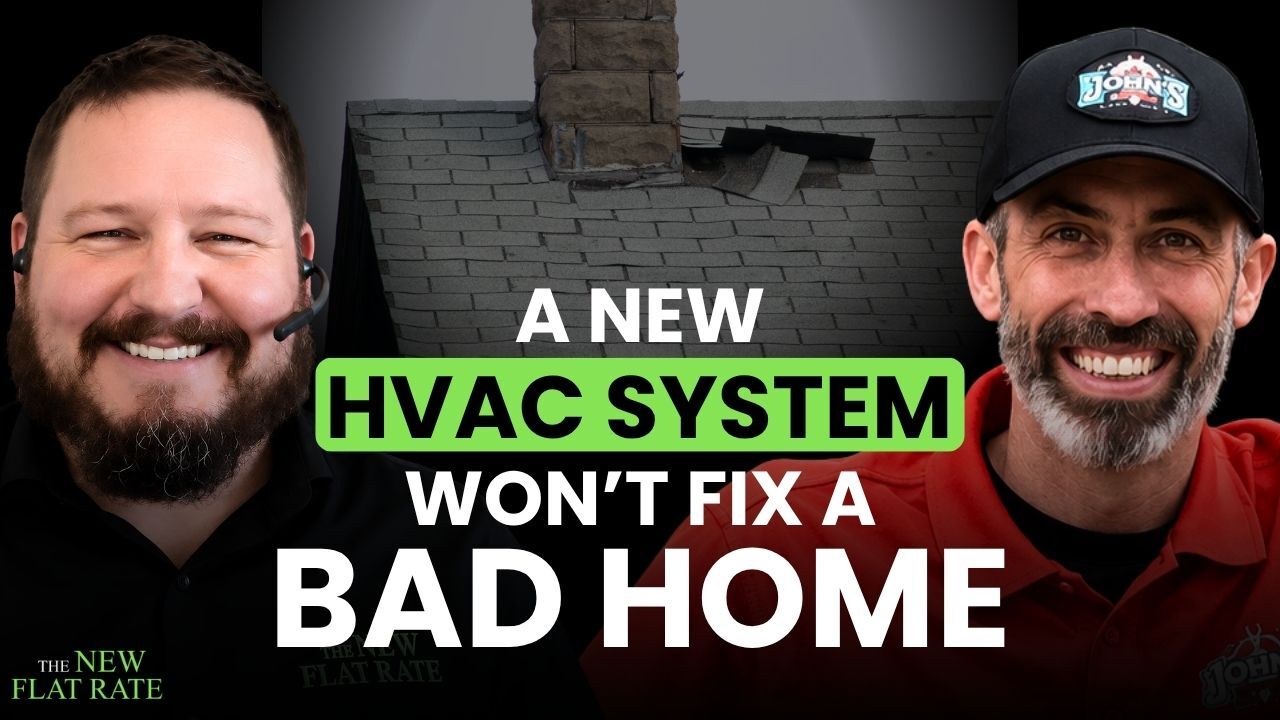
A replacement unit can restore operation without restoring comfort. When airflow, ductwork, return placement, or other conditions remain unaddressed, homeowners may still face hot rooms, noise, dust, or uneven temperatures.
The problem persists when a service visit focuses only on the failed component. That approach can leave customers without a clear picture of what caused the failure or what limits the system’s performance.
Jason Julian, business owner at Julian Heat and Air, a local family-owned HVAC company in Heber Springs, Arkansas, developed his approach after a new unit in his own home did not correct underlying ductwork and return-air problems.
The sections below break down how a more complete HVAC customer experience can center on diagnosis, informed choices, temporary comfort, and sound business practices.
A failed part may be the immediate issue, but it is not always the complete problem. A customer-centered assessment considers the equipment alongside the air path and the home conditions that affect comfort.
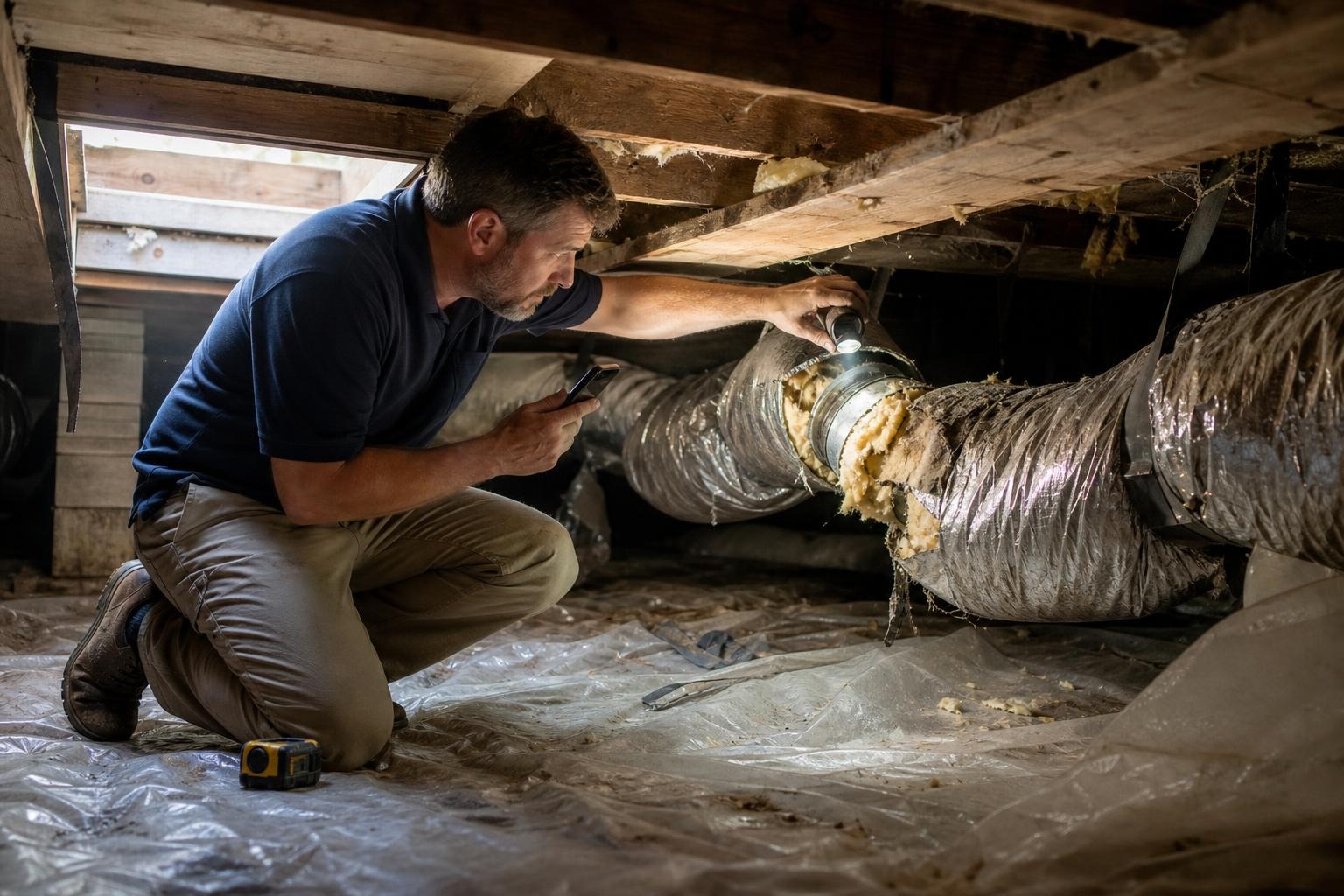
Air must reach the intended rooms and return to the system. Disconnected boots, uninsulated ductwork, leaks, and poorly located returns can undermine a system even when the equipment itself is new and running.
Room-specific concerns can help direct the inspection. A bedroom that remains uncomfortable may point to an air-distribution or return-air issue that equipment replacement alone will not resolve.
A capacitor or motor may have failed, yet surrounding conditions can place strain on other components. Examining cleanliness, airflow, and related parts helps frame a repair as a system decision rather than a single-part transaction.
For example, a dirty condenser can contribute to heat around equipment components. Identifying the condition behind the failed part gives the homeowner a fuller explanation of the available repair options.
Homeowners cannot be expected to see conditions in an attic, crawl space, or equipment cabinet. Photos and thermal images can make a hidden issue concrete and give the customer a clearer basis for considering a recommendation.
Evidence also keeps the discussion connected to the home rather than to unfamiliar technical terms. It can show where ductwork is disconnected, where condensation has been occurring, or where a return path needs attention.
This checklist does not replace technical judgment, but it prevents a narrow inspection from becoming the entire recommendation. It also keeps the explanation tied to conditions the homeowner can understand.
A stronger HVAC customer experience begins with identifying what the equipment can and cannot correct. Replacing a unit may be appropriate, but it should not be presented as the cure for defects that remain elsewhere in the home.
Customers make better decisions when they understand the condition, the available paths forward, and the tradeoffs. The goal is not to choose for them, but to provide enough relevant information for them to choose for their home.
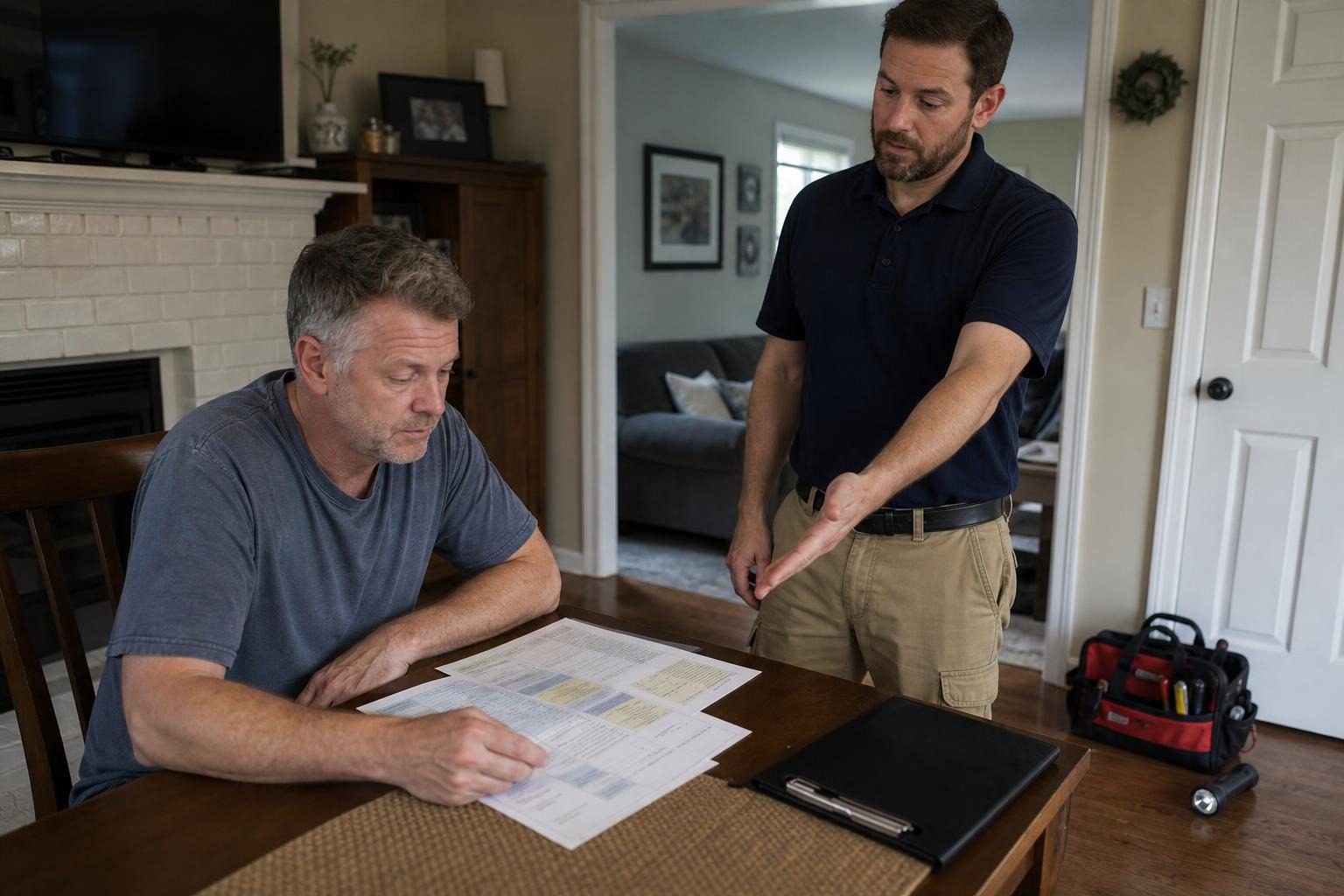
A technician can describe what is currently failing, what may be affected, and what each proposed service addresses. That leaves room for the homeowner’s budget, plans for the property, and preferences to shape the final choice.
This distinction matters because a service professional assesses the system, while the homeowner controls the decision. Clear explanations make that division practical rather than leaving customers to guess what a recommendation means.
Repair, broader repair, and replacement can serve different circumstances. Rather than treating age or repair cost alone as an automatic replacement trigger, recommendations can connect performance, condition, and the customer’s goals.
A homeowner planning to move soon may weigh options differently from one seeking a long-term improvement. Listening first helps ensure that the choices relate to the outcome the customer actually wants.
An offer-declined method lets customers accept or decline proposed solutions. Recording those choices clarifies what was offered and helps avoid confusion if a related problem appears later.
The record should distinguish the completed repair from work the homeowner chose not to pursue. That approach supports transparency without turning a recommendation into pressure.
A consistent process reduces pressure without withholding professional guidance. It also keeps the visit focused on a practical question: which option best fits this customer’s situation?
Choice is central to trust. An HVAC customer experience improves when recommendations are transparent, specific, and responsive to what the homeowner actually wants from the system.
Free list
Small touches homeowners remember
Repeat customers and five-star reviews come from the little things. The free Ultimate List of Wow Factor Ideas gives your techs a list they can use on every call.
✓80+ wow factor ideas
✓Each under $5 and 10 minutes
✓Filtered by trade, plus a truck card
A repair or replacement schedule does not remove the customer’s immediate discomfort. When a home cannot be restored the same day, a temporary measure can show that comfort matters before the permanent work is complete.
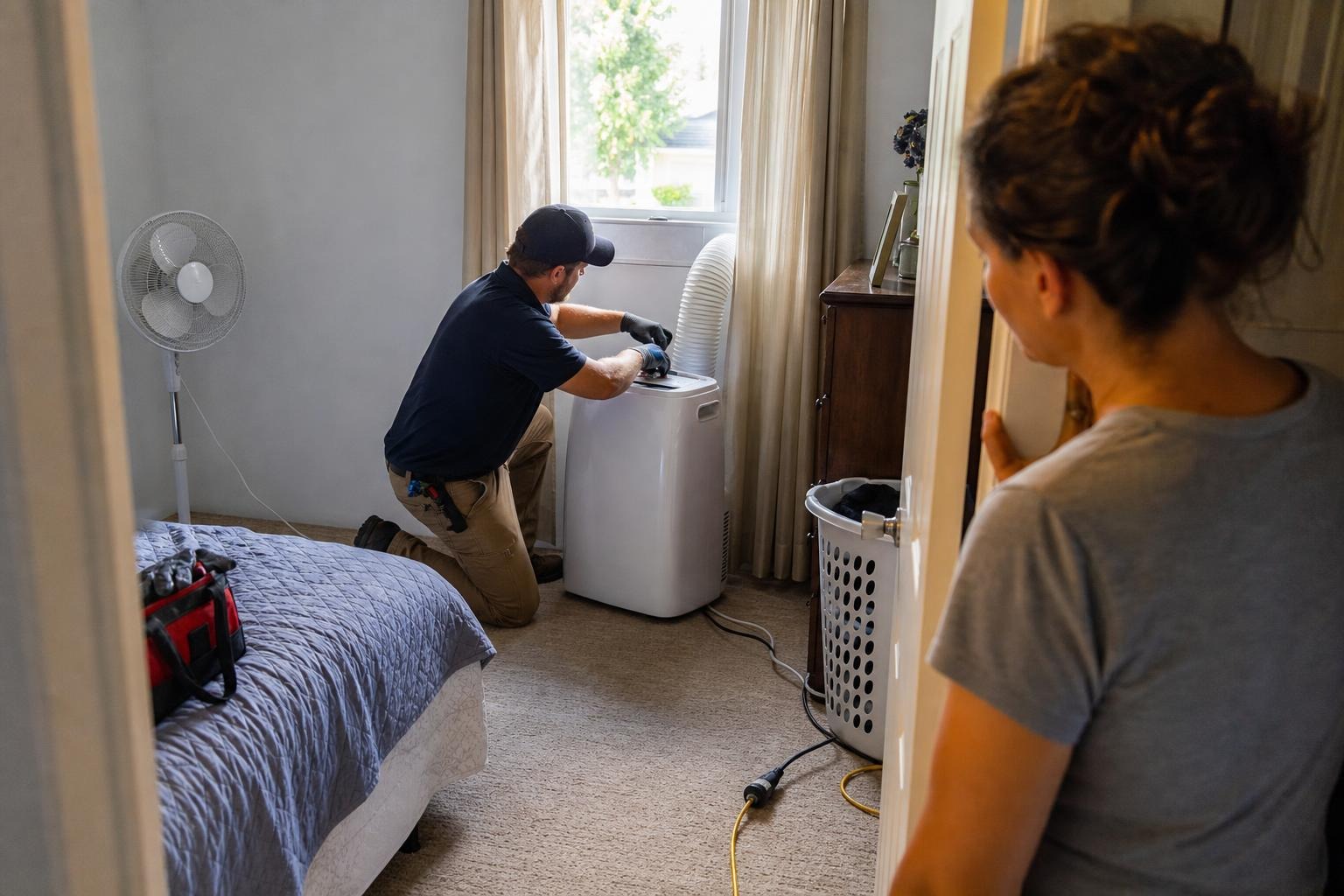
Portable air conditioners can keep at least one room comfortable when a repair or replacement cannot happen immediately. This acknowledges the homeowner’s present need without rushing a job that requires careful work.
A temporary unit is not a substitute for correcting the underlying system problem. It is a way to make the waiting period more manageable while the permanent service is planned and completed.
Portable units require a process for cleaning, sanitizing, tracking, delivery, and retrieval. Recording the unit assigned to each customer and documenting where it was placed creates a clear chain of custody.
Without that process, useful equipment can become an unmanaged expense. A simple record makes it easier to prepare units for the next customer who needs one.
A customer may choose another provider for the installation or repair. Offering temporary comfort can still be a respectful response to an urgent problem, rather than a tactic tied only to winning the work.
That posture helps keep the immediate focus on the person living in the home. It also gives service teams a practical way to demonstrate care before any final decision is made.
The details matter because temporary equipment can otherwise become an unmanaged expense. A simple process protects the company while making the assistance dependable for the customer.
Urgency does not require shortcuts. Providing reasonable comfort while the work is pending helps service teams balance immediate care with the time needed to address the actual problem correctly.
Good technical work and strong customer care need a business structure that can sustain them. Fast growth, payroll, insurance, taxes, tools, and cash flow can overwhelm an owner who tries to manage every responsibility alone.

Pricing needs to account for the costs of delivering service, not only the time spent on the immediate task. An owner who intends to build a team must plan for the operating costs that come with that responsibility.
Appropriate pricing supports the capacity to perform work carefully instead of treating every call as a quick transaction. It also recognizes that tools, labor, and business overhead remain part of serving customers well.
Rapid growth can bring revenue without creating stable cash flow. After dealing with borrowing and the pressure of expanding too quickly, Julian’s clearest business advice was to hire a CPA from the start.
A technically skilled owner does not have to carry every financial responsibility alone. Seeking qualified help in an unfamiliar area can leave more attention available for customers and the team.
Technical confidence should include humility. Seeking answers, training team members, and improving installation practices over time can help a company avoid treating past knowledge as a finished standard.
This mindset applies to both field work and leadership. Admitting what is not yet known creates room to find better methods instead of relying on an incomplete answer.
These habits support consistent work when demand increases. They also give owners more capacity to focus on customers instead of carrying every operational task alone.
The most durable customer promises depend on healthy operations behind the scenes. Service quality is easier to maintain when pricing, financial oversight, training, and delegation are treated as connected responsibilities.
Comfort problems rarely fit neatly inside a single equipment cabinet. The most useful service approach considers the system, air distribution, home conditions, and the customer’s immediate circumstances together.
First, investigate beyond the failed part. A new unit or a completed repair cannot correct disconnected ducts, poor return placement, or other conditions that continue to affect the home.
Second, explain findings and present choices without deciding for the homeowner. Clear options allow customers to weigh repair, improvement, or replacement against their own priorities.
Third, make care visible when timing matters. Temporary cooling, accurate documentation, and a well-managed retrieval process can protect comfort while permanent work is scheduled.
For any team seeking a better HVAC customer experience, begin by reviewing the service-call process. Add a whole-home inspection step, explain the evidence plainly, and build options around the customer’s stated needs.
Frequently Asked Questions
It includes the full service process: understanding the problem, explaining findings, offering relevant options, and managing comfort while work is pending.
Not always. Duct connections, insulation, return-air paths, and other home conditions may still limit comfort after equipment replacement.
Photos can show customers conditions that are otherwise hidden in attics, crawl spaces, or equipment areas and support a clearer explanation of the recommendation.
No. Repair cost alone does not determine the best choice; the system’s condition, performance, and the homeowner’s plans all matter.
The New Flat Rate : Aug 30, 2015, 4:42:47 PM
In a technical field like HVAC, it can be all too easy for customer service to slip by the wayside. Huge companies might provide their technicians...

The New Flat Rate : Sep 22, 2026, 7:29:59 AM
Most contractors know exactly how much they spend on Google Ads each month. They know what the truck wrap cost. They know what they paid for direct...

The New Flat Rate : Sep 17, 2024, 8:00:00 AM