

4 min read
How to Build a Technician Pay Scale That Works
The New Flat Rate : Sep 14, 2026, 7:45:00 AM
How to Build a Technician Pay Scale That Works
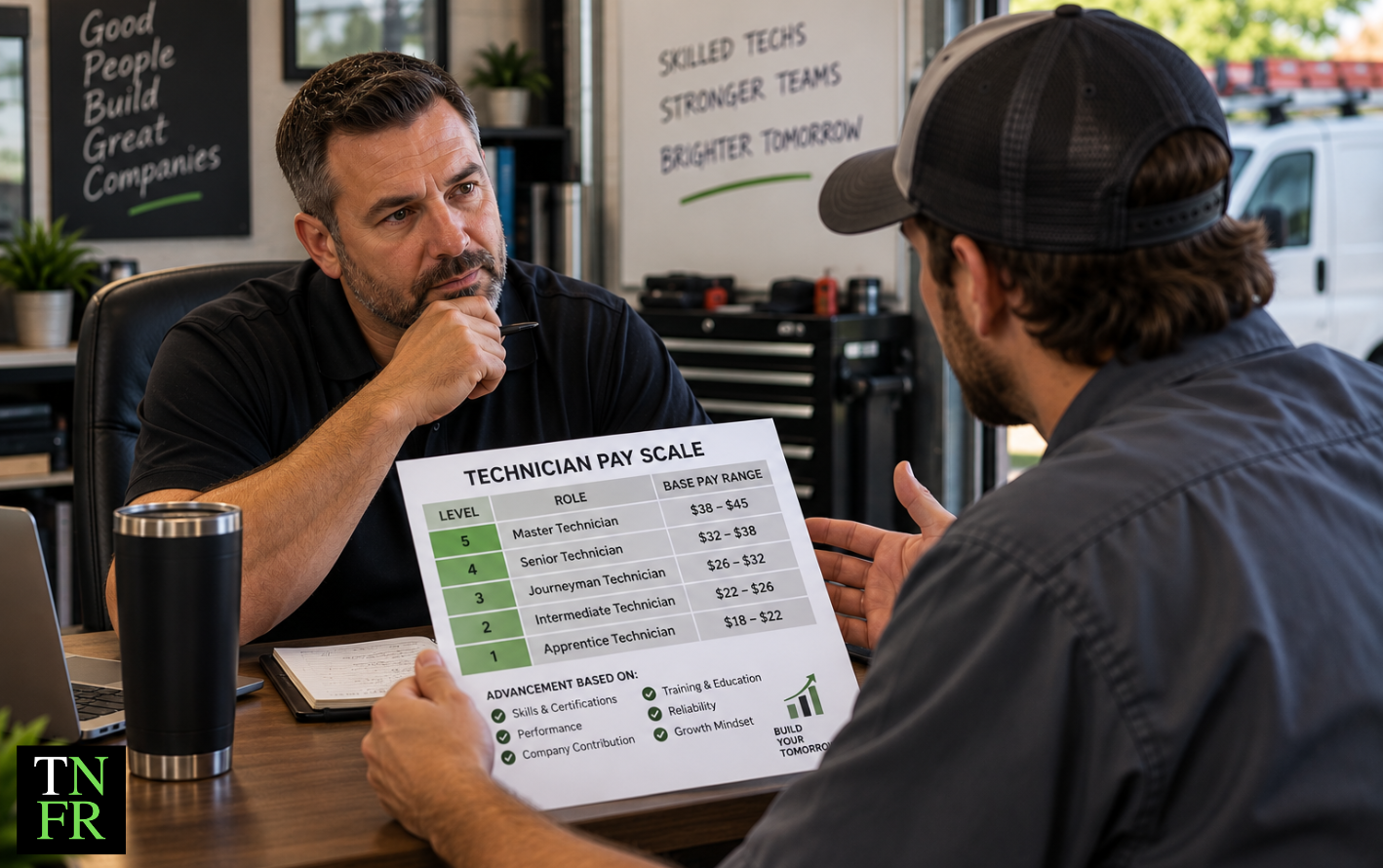
Your best technician walks into your office and tells you another contractor offered him $2 more an hour.
What do you do?
A lot of contractors match it.
Sometimes they beat it.
But now another company has helped decide what your technician is worth.
If raises only happen when someone asks for more money, threatens to leave, or gets a competing offer, you don't have a technician pay scale.
You're negotiating payroll one employee at a time.
Who this is for: HVAC, plumbing, electrical, and other home service contractors who want a clearer way to structure technician pay, raises, incentives and growth.
Your Technicians Should Know How to Earn Their Next Raise
Pay matters. But your technician's hourly rate only tells him what he makes today.
A good technician pay scale should also answer:
- What gets me to the next pay level?
- Which skills are worth more?
- Which certifications matter here?
- What do I need to improve?
- What incentives can I earn?
- What could I realistically make next year?
If your technicians don't know the answers, a competitor offering another $2 an hour becomes a simple pitch.
Your own pay plan needs to be just as clear. Your technicians should know where they stand today, what the next level looks like, and what it pays.
That can also help with a bigger problem: keeping good technicians long term. If retention is already an issue in your shop, read our guide on how to build a loyal team of reliable technicians.
Base Pay Should Be Built Around Something, Not Just Tenure
Matt Koop teaches contractors to start with an hourly base pay scale, then build increases around real skills, certifications and licenses instead of years on the job or gut feel.
The idea is simple: decide what your best technician needs to know, put a value on those skills, and let people earn their way up.
Once that list exists, the raise conversation stops being "when do I get another dollar?" and starts being "what do I need to learn to get to the next level?"
That gives apprentices and newer techs something concrete to work toward instead of a raise that feels arbitrary.
This is the difference between a pay rate and a pay scale.
A pay rate tells someone what they make.
A pay scale shows them how to make more.
A technician can learn a new skill, prove it in the field on a set schedule, and see base pay move as a result.
Your best people shouldn't have to threaten to leave before you talk about their next raise. They should already know how to earn it.
A stronger training system makes this easier because you can define which skills technicians need at each pay level. If you're working on that side of the business too, read HVAC Technician Training: What Most Programs Miss.
Want to Watch the Actual Pay Scale Training Session?
Matt breaks down the full system in this free video training, including how base pay, skill levels, incentives and consistency bonuses fit together.
Watch the Free Pay Scale Video Training →
Don't Build Your Entire Pay Plan Around Spiffs
Spiffs are common in home service technician compensation.
Sell this thermostat and get $25.
Sell this accessory and get $50.
There's nothing automatically wrong with that.
But Matt separates spiffs from incentives for a reason.
A spiff rewards one specific sale.
An incentive should reward behavior that helps the company operate better.
That might include:
- Completing paperwork correctly
- Showing up on time
- Keeping callbacks low
- Following your service process
- Maintaining the truck
- Completing and collecting work
Instead of paying technicians to chase one product, you're rewarding them for consistently doing the job the way your company needs it done.
Your Technician Pay Plan Still Has to Make Money
Here's where many pay plans break.
You want to pay good technicians well.
But you also have labor, materials, overhead and profit to cover.
That means you can't decide raises based only on what the contractor down the road is paying.
Matt teaches contractors to start with the company's numbers, decide how much revenue can go toward field labor, and build the pay scale inside that limit.
Before giving someone another $2 an hour, you should know:
- What does that increase do to your labor percentage?
- What level of production supports it?
- What additional skill or responsibility comes with it?
- Can your current pricing support it?
The hourly wage also isn't the full cost of that technician. Payroll taxes, benefits, and actual billable productivity all factor in.
If you haven't run those numbers recently, start with How to Calculate Your True Billable Hourly Rate.
Raises shouldn't be guesses.
Reward Consistency Too
One great week doesn't necessarily make a great technician.
That's why Matt's technician pay system includes a third piece: a consistency bonus.
The goal is to reward technicians who maintain strong results over time, not just the ones who happen to land one big sale.
The reward can take different shapes depending on what motivates your team. The structure matters more than the format.
Base pay rewards skill.
Incentives reward the right behaviors.
Consistency bonuses reward sustained performance.
Now your technician has several ways to earn more without turning every raise into another negotiation.
Build Your Pay Scale Before You Need It
The worst time to figure out your technician pay plan is when your best technician is standing in your office holding another offer.
Build it first.
Your technicians should already know what they make, why they make it, what the next level looks like, and what it takes to earn more.
Matt Koop walks through the full process in our free Pay Scale Video Training, including base pay, skill levels, incentives, consistency bonuses and how technician payroll connects to company profit.
Get Free Pay Scale Video Training
Learn how to:
- Build technician pay levels
- Tie raises to skills, certifications and licenses
- Create a clear growth path
- Structure technician incentives
- Reward consistency
- Keep technician pay connected to company performance
Watch the Free Pay Scale Video Training →
The next time another contractor offers your technician $2 more an hour, you shouldn't have to invent a counteroffer.
Your technician should already know what the next level is, what it pays, and exactly how to earn it.
-1.png?width=1780&height=450&name=LEAD%20MAGNETS%20-%20Download%20graphic%20for%20articles%20(5)-1.png)